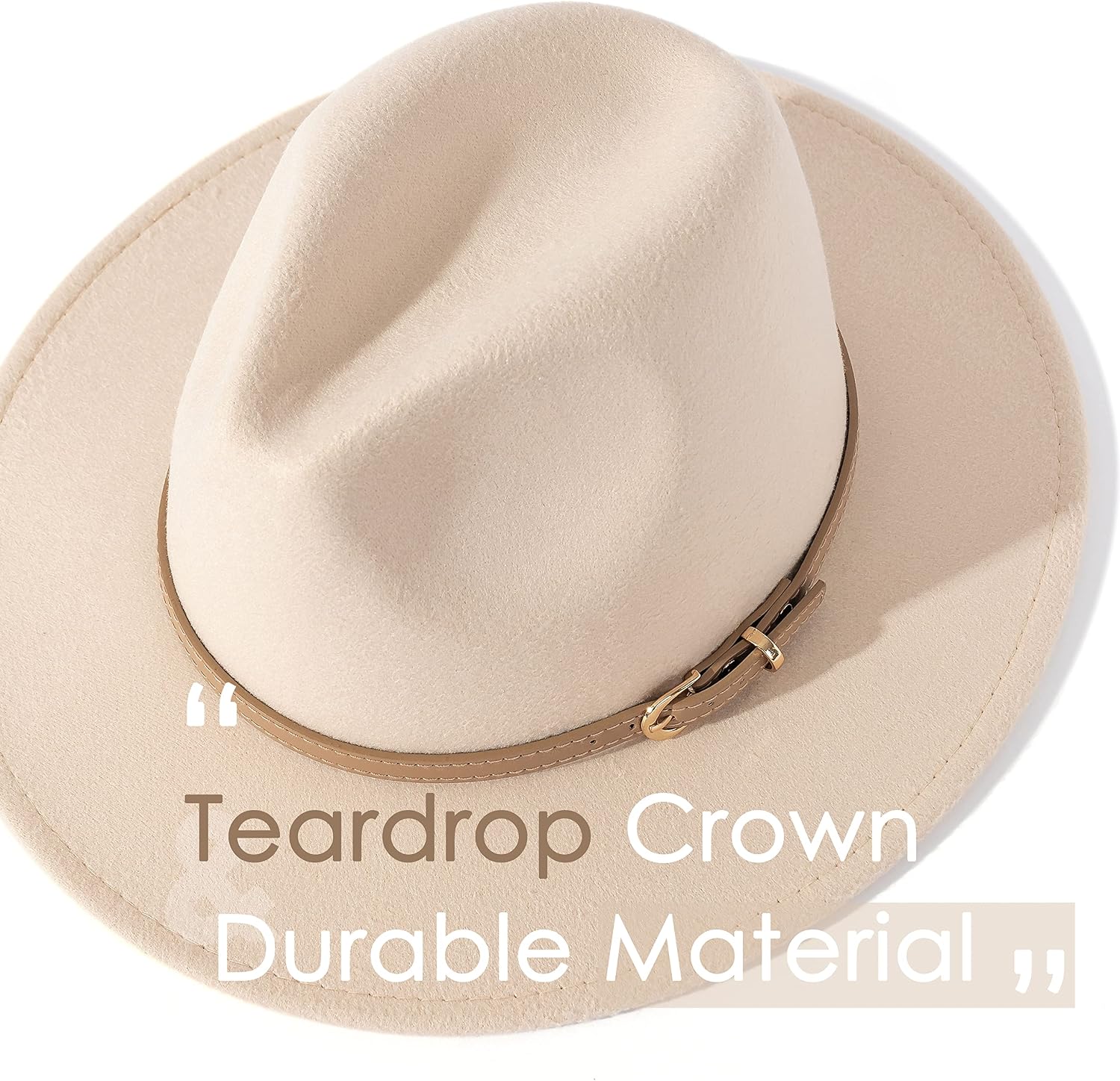
A felt fedora is exactly what it sounds like: a hat with a pinched, creased crown and a brim that goes all the way around, made from felt — a dense, compressed fabric traditionally produced from wool fibers (and occasionally rabbit or beaver fur for higher-end versions). You’ve probably seen this silhouette everywhere from old Hollywood photos to current runway looks, and right now it’s one of the most versatile hat shapes a woman can own. If you’re shopping for your first felt fedora and not sure where to start, this guide will walk you through the two decisions that matter most before you pull the trigger: what the wool (or fur felt) is actually graded on, and how brim width interacts with your proportions and your occasion. By the end, you’ll have a clear decision framework — not just a wishlist.
If you’ve already bought a felt hat or two and found yourself wondering why one held its shape through a rainy autumn and another went floppy by December, this is the article that explains the gap. Let’s get into the material science and the geometry.
| EDITOR'S PICKWallaroo Hat Company Women’s Pe… | Mid-tierFelt Wide Brim Fedora Hats for… | Budget pick[Lanzom Womens Classic Wide Brim…](https://www.amazon.com/dp/B09B16XFJW?tag=greenflower20-20) | |
|---|---|---|---|
| Material | 100% Wool Felt | Wool | Wool |
| UPF Rating | UPF 50+ | — | — |
| Adjustable | ✓ | ✓ | — |
| Packable | ✓ | — | — |
| Brim Type | — | Wide Brim | Wide Brim |
| Size Range | Small | 22" - 22-7/8" | One Size |
| Price | $75.00 | $29.99 | $27.99 |
| See on Amazon → | See on Amazon → | See on Amazon → |
Why Wool Grade Is the Price Ladder in Disguise
The felt used in fedoras exists on a quality spectrum that’s almost never labeled clearly on a retail product page, which is why intermediate buyers often pay mid-range prices and end up with entry-level construction. Harper’s Bazaar’s millinery overview (2024) describes the basic hierarchy well: mass-market felt is usually a wool-polyester blend, mid-range hats use 100% wool felt, and the upper tier shifts to fur felt — made from the underfur of rabbit, hare, or (at the very top) beaver.
Here’s what those distinctions mean in practice:
Wool-blend felt (typically under $100): The polyester content keeps cost down but reduces the fiber’s natural memory — the ability to spring back to its blocked shape after compression or moisture exposure. Reviewers of entry-level fedoras from brands like San Diego Hat Company and Scala consistently note that these hats soften and lose their brim structure after a season of regular wear. They’re serviceable for occasional use but aren’t built for daily rotation.
100% wool felt ($90–$250): The fiber is denser and has better shape retention. The quality within this tier still varies significantly based on how finely the wool was milled and how the felt was blocked (hand-blocked versus machine-pressed). A hand-blocked wool fedora from a brand like Brixton’s reserve line or a small independent milliner will outperform a machine-pressed hat using nominally the same material. Look for descriptions like “hand-blocked,” “hand-finished,” or “structured brim” in the product copy — these signal a more labor-intensive process that translates to longevity.
Fur felt ($250–$800+): This is where the material conversation shifts decisively. Rabbit-fur felt — used extensively by designers like Gladys Tamez and Eugenia Kim — is finer, lighter, and significantly more water-resistant than wool felt of equivalent weight. The fibers interlock more tightly during the felting process, producing a surface that repels light rain rather than absorbing it. Beaver felt, rarer and more expensive, is considered the apex material in traditional millinery — Smithsonian Magazine’s coverage of American hat-making history notes that beaver-felt fedoras were the luxury good of the 19th century precisely because of this water resistance and structural integrity.
The practical shorthand: if you’re buying a hat you plan to wear more than six times a year, the upgrade to fur felt pays for itself in shape retention alone. If this is a once-a-season piece, good 100% wool felt at the $150–$250 mark is the sweet spot.
The Brim Width Equation: Proportion First, Occasion Second
Brim width is where a lot of buyers make their only real mistake, and it’s a fixable one once you understand the two variables at play.
Variable 1: Your shoulder-to-head ratio. A brim that extends significantly wider than your shoulders will read as costume rather than proportion. Conversely, a narrow brim on a broad-shouldered frame can look underpowered and accidental. The general rule — cited in Town & Country’s hat-buying guide (2023) — is that brim width should approximate or slightly exceed the width of your cheekbones at the widest point. This is a starting point, not a law, but it’s a useful anchor.
The practical breakdown by brim width:
| Brim Width | Category | Best Occasion Context |
|---|---|---|
| Under 2 inches | Snap/fedora hybrid | Casual, everyday, urban |
| 2–2.75 inches | Classic fedora | Work, weekend, smart-casual events |
| 3–3.75 inches | Wide-brim fedora | Brunch, garden parties, destination travel |
| 4 inches+ | Statement/occasion | Derby adjacent, editorial, galas |
Variable 2: The occasion dress code. Brim width communicates formality in ways that fabric alone doesn’t. Elle’s roundup of felt hats for fall/winter 2025 makes this point cleanly: a 2.5-inch brim in charcoal wool reads polished and urban, appropriate for a business dinner or a gallery opening. That same silhouette in a 4-inch brim suddenly becomes an occasion hat, more at home at a race-day event or an outdoor wedding than in a conference room.
For buyers building a wardrobe rather than shopping for a single occasion: a 2.75-to-3-inch brim is the most versatile cut. It’s wide enough to register as intentional styling, narrow enough to wear in environments where a larger brim would feel theatrical.
Reading Construction Signals When You Can’t Touch the Hat
Most fedora purchases happen online now, which means you’re making a material and construction judgment from photos and product copy. Here are the signals that actually carry information:
“Hand-blocked” means the felt was shaped over a wooden or metal form by hand, typically with steam. This produces crisper edges, a more precise crown shape, and better long-term structure than machine pressing. It also means the hat was made by someone who can be held accountable for its geometry.
“Raw edge” vs. “bound edge.” A raw edge — where the brim simply ends without a sewn binding — signals confident material quality. You can only leave felt unbound if it’s dense and fine enough not to fray or curl. A bound edge (a fabric or grosgrain ribbon sewn along the brim’s perimeter) is not a flaw, but it can indicate the manufacturer isn’t confident in the felt’s self-finishing ability. On a high-quality fur felt fedora from a brand like Gladys Tamez or a custom piece from an independent milliner, raw edges are standard.
Wire vs. no-wire brim. A millinery wire sewn into the brim’s edge allows the brim to be shaped and reshaped by the wearer. This is almost always a feature on mid-to-high-quality fedoras and is worth seeking out if you want to adjust your hat’s angle or flip portions of the brim. Entry-level fedoras often omit the wire to reduce cost; the result is a brim that’s fixed in its factory shape and may warp unpredictably with humidity.
Sweatband material. The interior leather or grosgrain sweatband is a proxy for overall construction investment. Genuine leather sweatbands — listed as “real leather” or specifying the leather type — appear on hats where the maker spent money on the interior as well as the exterior. Faux leather or plain fabric sweatbands are typical in the under-$100 tier.
Vogue’s coverage of the fedora’s 2024 return to the runway (featuring Maison Michel and Saint Laurent) repeatedly emphasized the interior construction details as the differentiator between pieces that photographed similarly but sat on the head entirely differently. The fit difference is real.
When a $600 Felt Fedora Is Meaningfully Better (and When It Isn’t)
This is the question the price ladder always raises, and it deserves a direct answer.
The $600 fedora is meaningfully better when:
- You’re wearing it to photographed occasions (weddings, race days, editorial contexts) where the material’s surface quality — the fine, even nap of beaver or high-grade rabbit fur felt — will register.
- You’re wearing it regularly across multiple seasons and need genuine shape retention.
- Fit and proportion are non-negotiable: bespoke or made-to-measure construction allows for a crown depth and brim geometry tuned to your specific head size and face shape, which off-the-rack hats — at any price — cannot replicate.
The $600 fedora is not meaningfully better when:
- This is a once-a-year occasion hat worn for three to four hours.
- You’re buying your first felt fedora and haven’t yet established what silhouette works for your face and wardrobe. Start at the $150–$250 range to calibrate your preferences.
- The design itself is simpler than lower-priced alternatives — a plain, unembellished fedora in mid-range wool felt from Brixton’s upper line or a Lack of Color Archive style will satisfy the same aesthetic need without the fur-felt premium.
Harper’s Bazaar’s millinery feature (2024) puts the threshold clearly: the investment level justifies itself when the hat is doing structural and material work that a less expensive version genuinely cannot do — not simply when the price tag signals aspiration.
The Decision Rule
If you take nothing else from this guide, take this framework:
- Occasion hat, worn 1–3 times per year, budget under $200: 100% wool felt, 2.75–3-inch brim, hand-blocked if possible. Brands like Lack of Color, Brixton, and Janessa Leoné operate reliably in this zone.
- Wardrobe hat, worn regularly across a full season, budget $250–$450: Move to rabbit fur felt. Prioritize hand-blocking and a wire-reinforced brim. This is where independent milliners often outperform big-brand offerings at the same price.
- Investment/occasion hat, no-compromise fit, budget $500+: Beaver or premium rabbit fur felt, bespoke blocking, and a sweatband fitted to your head circumference. Gladys Tamez, Eugenia Kim’s structured line, and regional custom milliners are the right conversation partners here. Treat this the way you’d treat a bespoke tailoring purchase: the hat is being made for your proportions, not a size-medium head.
The brim width question resolves fastest when you anchor it to your widest point (shoulder or cheekbone, whichever is broader) and the formality of your primary occasion. When in doubt, 2.75 inches is the decision that ages best in a wardrobe — wide enough to read as intentional, narrow enough to go almost anywhere.