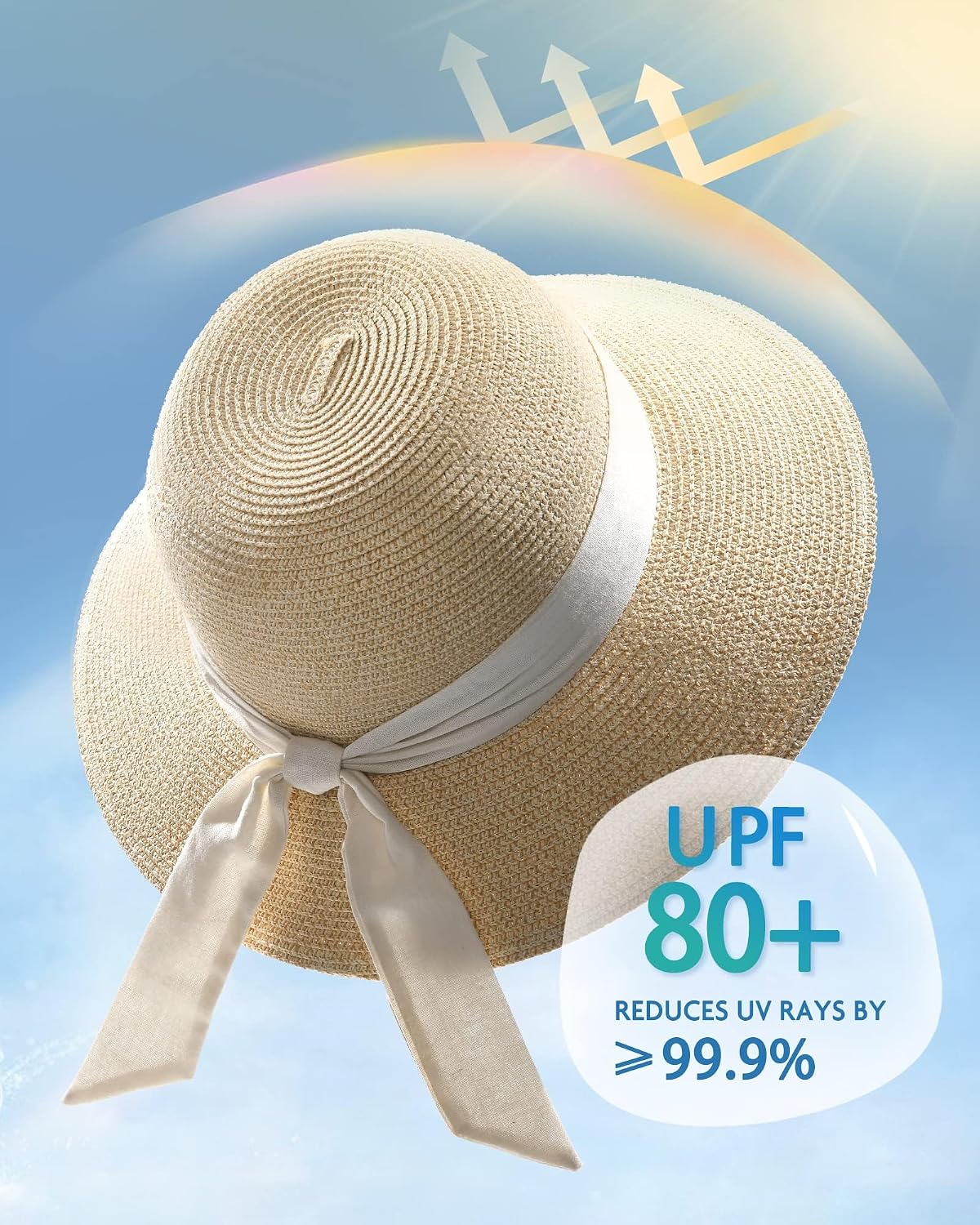
You’ve finally found the perfect wide-brim sun hat — the kind that makes you look like you actually planned your resort vacation instead of panicking at the airport gate. The problem is getting it there. A “sun hat” is simply a broad-brimmed hat designed to shade your face and neck from UV rays; “packable” means the hat is engineered to be rolled, folded, or compressed into luggage and then spring back to its original shape. That second word is the one doing all the work, and not every hat earns it. This guide is for anyone who’s arrived at a beach villa to find their hat looking like a crushed fruit bowl — and wants to understand why it happened and how to avoid it next time. By the end, you’ll know exactly which materials hold up, which silhouettes are forgiving, how to match your hat choice to your packing style, and where the meaningful quality jumps are as you move up the price ladder.
If you’ve already bought a few travel hats and found yourself underwhelmed, that experience is useful data. Let’s use it.
| EDITOR'S PICKHat Attack Women's Vented Luxe… | Mid-tierRoxy Women's Tomboy Woven Straw… | Budget pick[FURTALK Womens Sun Straw Hat Wi…](https://www.amazon.com/dp/B099R8F9DY?tag=greenflower20-20) | |
|---|---|---|---|
| UPF rating | — | — | 80 |
| Adjustable | — | ✓ | — |
| Packable | ✓ | — | ✓ |
| Material | Straw | Woven Straw | Straw |
| Size | One Size | Medium-Large | Medium-Large |
| Price | $166.00 | $50.56 | $23.39 |
| See on Amazon → | See on Amazon → | See on Amazon → |
Why Most “Packable” Hats Fail — and What Actually Holds Up
The word “packable” has become marketing shorthand, which means it’s now nearly meaningless on a hangtag. To evaluate the claim honestly, you need to understand what the hat is made of — because material is the single biggest predictor of whether a brim returns to shape after compression.
Parisisal and paper straw are the budget-tier packable standards. Parisisal (pronounced “paris-a-SAL”) is a woven fiber made from sisal grass, often blended with abacá or paper for flexibility. It’s genuinely rollable and recovers well from a moderate crush. The tradeoff: it’s softer than it looks in photographs, can fray at the brim edge with heavy use, and the weave is typically loose enough that you can see daylight through it — meaning UV protection depends on the crown’s density, not just the brim width. Harper’s Bazaar’s resort dressing guide notes that paper-straw hats rated under UPF 30 are common in the $30–$80 range, which is fine for shade but not a substitute for sunscreen.
Braided raffia sits in the middle tier. Raffia is a palm fiber that’s naturally pliable when woven in a flat braid, which is why it tolerates rolling better than rigid straw. The texture is what you see on a lot of Lack of Color and Eric Javits pieces. Owners of raffia hats in the $120–$250 range consistently report that the material rebounds well from a single-layer roll (brim tucked inward, crown stuffed with socks or scarves) but starts to show crease memory after five or six trips if stored carelessly. The Cut’s packing feature flags this specifically: raffia holds shape better when rolled loosely rather than folded flat.
Parisisal-paper blends at the mid-tier — what Eric Javits’s “Squishee” line popularized — are woven tight enough to provide meaningful UPF and flexible enough to compress without structural damage. Vogue’s sun hat roundups have returned to the Squishee category repeatedly across 2024 and 2025 because the concept is genuinely engineered, not just marketed. These are hats where the weave itself is designed for compression.
Wool felt and fur felt are the wildcard. A quality fur felt fedora — the kind Gladys Tamez blocks by hand — can absolutely survive a suitcase if packed correctly (crown-down, brim unsupported, wrapped in tissue). But felt is moisture-sensitive, and a felt hat packed damp or stored in a humid suitcase for a transatlantic flight can take a permanent set in the wrong direction. For resort trips to humid climates, felt is a specialty call, not a general-purpose answer.
What genuinely doesn’t recover: lacquered sisal, structured buckram-brimmed fascinators, hand-blocked rigid shapes, and any hat with wire-edged brims. These are not packable. No amount of gentle handling changes the physics.
The Packing Method Gap (It’s Not Just the Hat)
A good packable hat paired with a bad packing method still arrives wrecked. Here’s the tradeoff matrix:
Rolling inward (brim curled toward crown): Works well for floppy straw and raffia. Keeps the crown shape intact. Best for soft-brimmed hats without significant structure.
Rolling outward (brim curled away from crown): Counter-intuitive but useful for hats with a stiffer brim that you want to keep flat. Creates a “tube” shape that fits in a duffel side pocket. Who What Wear’s editor testing roundups note this works specifically well for wide parisisal hats with reinforced brims.
Crown-stuffing: Fill the hat’s crown with soft items — underwear, a silk scarf, a soft-sided pouch — before rolling or nestling it. This prevents the crown from collapsing under the weight of surrounding clothes and is the most important single step most travelers skip.
Hat box (carry-on): The only truly zero-compromise option for structured hats. If you’re traveling with a Philip Treacy piece or a custom-blocked felt hat, this is not negotiable. Most major airlines (as of 2026) will accommodate a hat box in the overhead bin if you board early; it is not checked at the gate in most cases, but confirm with your carrier. The Cut’s hat-packing feature makes this point plainly: a $500 hat deserves a $35 hat box, and the math is obvious.
By the Numbers: What You’re Buying at Each Price Tier
| Price Range | Typical Material | Packability | UPF Rating | Trade-off |
|---|---|---|---|---|
| $28–$80 | Paper straw, paper-parisisal blend | High | UPF 15–30 (variable) | Lower recovery after repeated packing; brim may fray |
| $90–$180 | Raffia braid, parisisal-paper blend | High–Medium | UPF 30–50 (better weave density) | Needs careful roll technique; recovers well for 3–5 trips |
| $200–$400 | Fine raffia, braided toyo, Squishee-style | Medium–High | UPF 50+ on quality pieces | Best balance of structure and flexibility; longer lifespan |
| $450+ | Hand-blocked felt, couture straw, custom sinamay | Low (unless designed for travel) | Varies | Not truly packable; requires hat box or checked luggage |
Town & Country’s survey of hat fabrics notes that UPF ratings above 50 in straw hats typically require a weave density that actually reduces packability — a genuine material tradeoff, not a marketing failure.
The Decision Frame: Which Hat Fits Your Trip Type?
This is where the “packable” category actually splits into three meaningfully different decisions, and conflating them is why so many buyers end up disappointed.
If you’re doing carry-on-only travel to a beach destination: Your priority is pure recovery. You need a hat that can be rolled into a cylinder 4–5 inches in diameter, live at the bottom of a backpack for six hours, and emerge looking intentional. The parisisal-paper blend category at $90–$180 is your home base. Raffia hats from Lack of Color and the Eric Javits Squishee line are the two categories that come up most consistently in aggregated reviews for this use case. If budget is tight, a dense-weave paper straw in the $40–$65 range from a known brand (not an unbranded import) can work for one or two trips before the brim edge softens.
If you’re doing checked luggage travel with hat as a wardrobe anchor: You have more options. A raffia hat rolled with crown-stuffing and wrapped in a t-shirt survives a checked bag better than most people expect. Consider moving up to $150–$250 for a hat that has brim reinforcement and a sweatband that won’t delaminate in heat. This is the tier where Eric Javits, Helen Kaminski (Australian brand with strong resort retail presence), and Brixton’s straw line live. Owners in this range consistently report two to three seasons of resort use before visible wear becomes an issue.
If you’re a bridal stylist or wardrobe consultant sourcing hats for clients who travel to destination events: Stop treating this as a packable-hat question and start treating it as a logistics question. Couture-adjacent pieces — Maison Michel, Eugenia Kim event hats, any hand-blocked custom piece — travel in a hat box as carry-on, full stop. The hat is the hero piece; the suitcase works around it. If your client won’t commit to that logistics chain, you’re sourcing the wrong hat.
The One Thing That Separates a $150 Hat from a $60 One on This Specific Question
It’s the brim reinforcement and weave consistency, not the material category itself. A $60 paper straw hat and a $150 raffia hat are both technically “packable” — but reviewers who own both consistently report that the $150 hat holds its brim curve after packing where the $60 hat goes floppy. This matters more at wide brims (4 inches and above) than at narrow brims. A 3-inch brim hat in paper straw at $45 often performs acceptably because there’s simply less brim to lose its shape.
The jump from $150 to $250–$300 buys you a meaningful improvement in how many times the hat will recover cleanly — the difference between a hat that lasts two resort seasons and one that lasts four or five. Vogue’s sun hat features in both 2024 and 2025 consistently positioned the $200–$300 tier as the “buy once, travel repeatedly” category, which tracks with what owners in that range report about longevity.
The jump from $300 to $500+ in sun hats typically buys you craftsmanship, provenance, and silhouette design — not better packability. In fact, as noted above, it often buys you less packability. That’s not a flaw; it’s a different product category wearing the same seasonal label.
The Decision Rule
If you need a hat that genuinely survives a carry-on repeatedly: Spend $120–$250 on a parisisal-paper blend or tight-braided raffia from a brand that specifically engineers for compression (Squishee-style construction is the benchmark). Use crown-stuffing every time. Expect 3–5 seasons of clean recovery.
If you need one trip’s worth of beach-hat function on a tight budget: A dense-weave paper straw at $40–$70 will do it once or twice before showing wear. Buy it knowing what it is.
If you’re sourcing for a client or occasion where the hat is the statement: Skip the packable category entirely, commit to the hat box, and buy the hat the event deserves.
The hat that looks best on arrival is the one packed honestly.