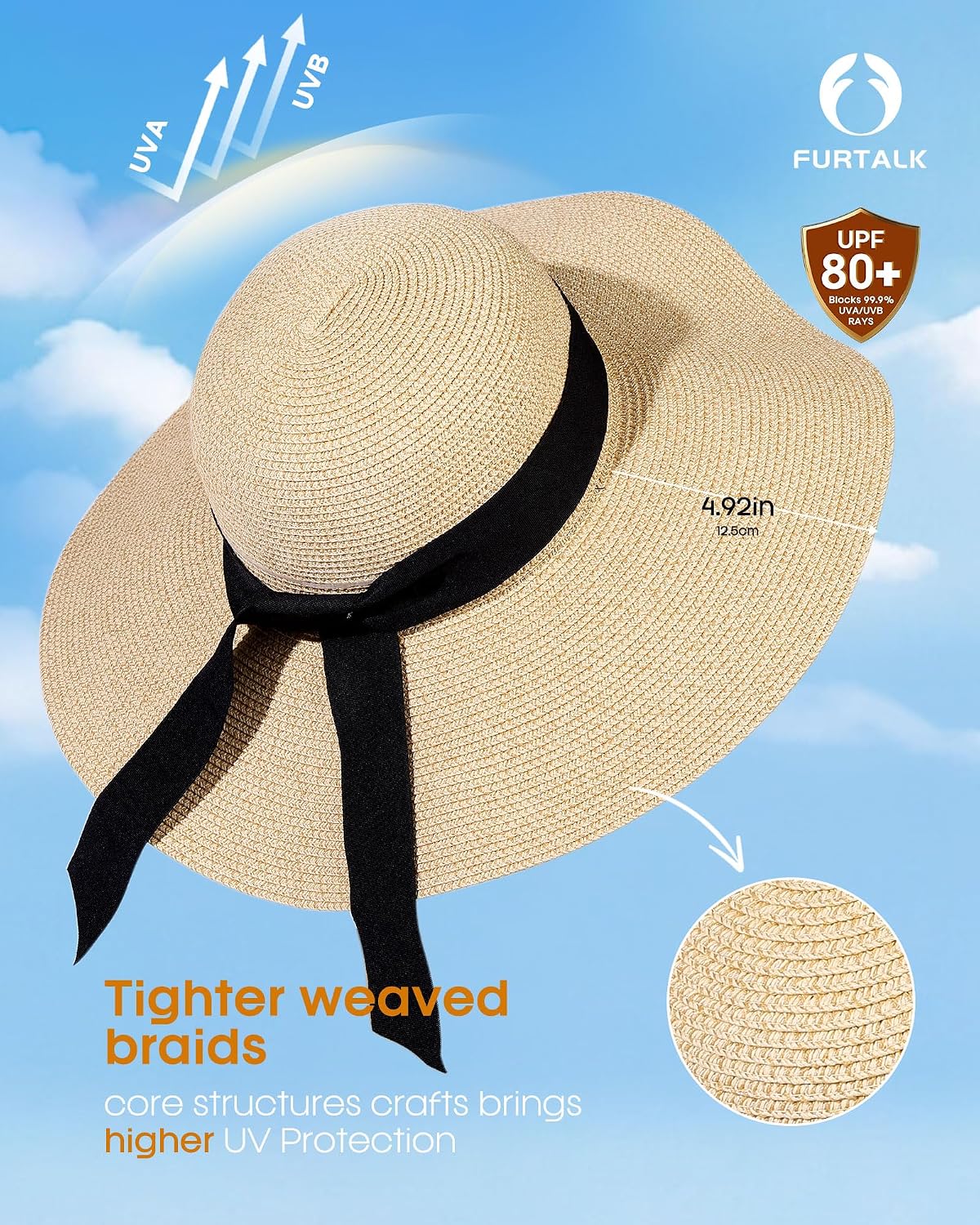
If you’ve ever ordered a hat that looked stunning on a runway model and arrived looking like a satellite dish on your head — or, worse, a modest little dinner plate when you wanted drama — you already understand the central frustration of buying sun hats online. The culprit is almost always brim width: the measurement (in inches or centimeters) from the base of the crown to the outer edge of the brim, taken straight across. That number, usually tucked into a listing’s spec sheet, is the single biggest lever on how a hat reads on your body. A 4-inch brim sits differently on a 5’2” frame than on a 5’9” one. A 5-inch brim might be elegant on someone with broad shoulders and overpowering on someone with a delicate bone structure. This guide is here to help you decode those measurements before you buy — not after the return window closes.
If you’re already shopping at the Lack of Color, Eric Javits, or Gladys Tamez tier and you’ve been through a few buying cycles, you know the vocabulary. What this article adds is a decision framework: the math behind brim-to-frame proportion, the tradeoffs between materials that change how a brim behaves at different widths, and clear if/then rules for matching a hat to an occasion and a silhouette.
| EDITOR'S PICK[Janessa Leone Women's Teagan St…](https://www.amazon.com/dp/B0BHXCLZ59?tag=greenflower20-20) | Mid-tier[Hat Attack Women's Vented Luxe…](https://www.amazon.com/dp/B0DBWGHP24?tag=greenflower20-20) | Budget pick[FURTALK Womens Sun Straw Hat Wi…](https://www.amazon.com/dp/B079QKBS1M?tag=greenflower20-20) | |
|---|---|---|---|
| Brim Width | — | — | Wide |
| UPF Rating | — | — | UPF 80 |
| Packable | — | Packable | Foldable Packable |
| Size | Small | One Size | Medium-Large |
| Price | $277.00 | $166.00 | $23.39 |
| See on Amazon → | See on Amazon → | See on Amazon → |
The Brim Width Numbers, Demystified
The industry doesn’t agree on clean category names, but in practice, the market sorts into four working bands that editorial sources like Harper’s Bazaar and Who What Wear consistently reference:
| Label | Brim Width | Best Read As |
|---|---|---|
| Narrow | Under 2.5 in | Casual / structured, minimal sun coverage |
| Mid-brim | 2.5–3.5 in | Everyday versatility, most face shapes |
| Wide | 4–5 in | Classic sun-hat territory, strong occasion presence |
| Statement / Oversized | 5.5 in and up | Editorial, race day, bridal, full-shade coverage |
These aren’t official standards — individual brands measure differently, and some include any hat roll or upturn in the stated number while others measure the flat projection only. That inconsistency is worth naming: a “5-inch brim” from one maker may project 4.5 inches once the edge curls up, while another brand’s “4.5-inch” sits dead flat and reads wider. When you’re spending $300–$600 on a hat, it’s worth contacting the retailer directly for a flat-lay photo with a ruler in frame if the listing doesn’t show one.
How Frame and Proportion Change Everything
Here’s where the practitioner-level thinking starts. Brim width doesn’t operate in isolation — it’s always in dialogue with three variables: your shoulder width, your height, and your crown height (the vertical rise of the hat’s top section above the brim). Getting these three working together is what separates a hat that “fits” from a hat that looks right.
Shoulder width is the anchor. A general proportion principle cited across editorial sources including The Cut and Harper’s Bazaar’s face-shape guides is that a hat’s visual diameter — brim edge to brim edge — should not dramatically exceed your shoulder width. Exactly how far you can push that before it reads theatrical versus elegant depends on the occasion (theatrical is fine at Derby; it’s a lot at a garden luncheon), but the underlying math is useful: if your shoulders measure approximately 16 inches across, a hat with a total diameter over 20–22 inches will read as an intentional statement rather than casual elegance. That’s not a warning — it’s a decision point.
Height creates vertical room for the crown. Taller wearers can carry more crown height without the hat appearing to overwhelm the face, which matters because crown height is often where a hat’s formality lives. A telería (flat-crowned) shape reads casual and beachy. A high-blocked oval crown shifts the same brim width toward occasion dressing. If you’re under 5’4”, a very tall crown (4 inches or more) with a wide brim can visually shorten your neck. The workaround is dropping to a slightly narrower brim — say, 4 inches instead of 5 — and accepting that you’re trading a bit of sun coverage for proportion.
Face shape operates within this larger frame. Much of the advice floating around focuses heavily on face shape — “round faces should avoid wide brims” — but this is somewhat overstated. Face shape matters at the margins; shoulder and height proportion is the primary driver. That said, the one consistent editorial note from sources including Who What Wear is that a very small face benefits from a structured, defined brim (one with a wire edge or stiff weave) rather than a floppy undulation, because the clear line gives the face a frame rather than drowning it.
Material and Weave: How They Change What “Wide” Means in Practice
Two hats with identical 5-inch brims can behave completely differently depending on material — and that behavioral difference should shift your decision if you’re buying for a specific occasion or climate.
Parisisal (a fine sisal fiber woven tightly, often confused with genuine sisal) is lightweight, holds its shape in moderate humidity, and takes a wire edge well. For a race day or garden party in a temperate climate, it’s the right structural choice at wide brim widths — reviewers consistently note that a 5-inch parisisal brim holds its angle rather than drooping through a long afternoon.
Natural toyo and paper straw are accessible and beautiful but notoriously humidity-sensitive. At brim widths above 4 inches, owners report drooping in coastal or summer-humid conditions. If you’re buying a wide-brim hat for a beach wedding in the Southeast or a Caribbean event, this matters. A wire-reinforced edge on a paper-straw hat mitigates this significantly.
Raffia is having a sustained editorial moment as of 2025–2026 — Vogue has cited it in multiple sun-hat roundups as the dominant texture in the market right now. Raffia is slightly heavier than toyo, has a wonderful textural presence, and tends to hold a gentle shape without a wire edge. At 4–5 inches, it reads relaxed-luxe rather than structured. The tradeoff: it’s not a rain-resistant material, and the weave on budget raffia can be loose enough that sun protection is reduced.
Seagrass and wheat straw are thicker, more rigid materials common in mid-market hats ($40–$120). At wide brim widths, they hold shape reliably but can crack under stress — folding or packing these hats is not a good idea the way it is with a fine parisisal. Buyers who travel frequently report this as the primary durability complaint.
Occasion Mapping: What Brim Width to Target by Dress Code
If you’re buying with a specific event in mind, here’s an explicit if/then framework:
If the occasion is Kentucky Derby or a formal race day: Target 4.5 inches and above. Town & Country’s Derby coverage consistently notes that brim width is one of the primary visual signals at Churchill Downs — smaller brims read as guest-level; wider brims read as participant. Statement oversized (5.5 inches+) is correct here if your overall frame can carry it. Go wire-edged for shape retention through a long outdoor day.
If the occasion is a garden party, outdoor bridal shower, or outdoor wedding as guest: 3.5–4.5 inches is the sweet spot. You want presence without competing with the bridal party. A mid-brim hat in parisisal or fine raffia at this range reads polished without requiring the hat to be the centerpiece of your outfit.
If the occasion is a beach vacation, casual summer weekend, or outdoor concert: 4–5 inches in a natural straw or raffia is appropriate, and here’s where you can prioritize comfort and packability over structure. A floppy wide-brim with no wire edge is correct in this context — the relaxed shape is part of the aesthetic.
If the occasion is church or a formal daytime social event: 3–4 inches with a defined, upturned brim reads more tailored. Church hat culture — particularly in the tradition documented by Smithsonian Magazine’s coverage of African American church hat tradition — prizes architectural precision and coordinated color over raw brim size. Width alone is not the measure here; how the brim is finished and angled matters as much.
If you’re a bridal stylist or wardrobe consultant sourcing for a client: The decision frame shifts. You’re not optimizing for your own frame — you’re building a brief. The most useful questions are: Is this hat being photographed or primarily worn in person? (Photography favors wider, more dramatic brims that read at distance.) What is the client’s shoulder-to-height ratio, and do they have experience wearing wide brims? First-time hat wearers often find that 4 inches is as much as they can wear comfortably without feeling self-conscious; working them up to 5+ over a fitting session is more effective than starting there.
A Few Honest Tradeoffs to Name Directly
UV protection does not scale linearly with brim width. The Skin Cancer Foundation’s guidance on sun-protective clothing (referenced across Wirecutter’s sun-hat coverage) notes that a 3-inch brim offers meaningful face and neck protection, and the incremental gain above 4 inches is primarily about coverage to the shoulders and upper chest. If UV protection is your primary driver, you need to check UPF rating of the material, not just measure the brim.
Wider brims are harder to wear in wind. This is not a deal-breaker but it’s worth naming: a 5.5-inch raffia brim becomes a sail in a coastal breeze. A hat pin or a chin cord (which many couture hats include and mid-market ones often don’t) is worth factoring into your budget if you’re buying a wide brim for outdoor events where wind is likely.
Price does not always buy more width — it buys better behavior. The difference between a $45 wide-brim straw and a $280 one from Eric Javits or a $500 custom-blocked felt from Gladys Tamez is not primarily that the expensive hat is wider. It’s that the expensive hat holds its shape, returns to form after handling, ages without cracking, and was constructed to sit on the head rather than perch on it. That said, if you need a wide-brim hat for a single outdoor occasion and don’t anticipate wearing it more than two or three times, the honest answer is that a mid-range parisisal or raffia at $80–$150 will serve you fine.
The bottom line, in plain terms: measure your shoulders, know your occasion, and match the material to your climate. A 4-inch parisisal is probably the most versatile hat in the buying spectrum — enough presence to read at a wedding, structured enough to survive a full race day, proportionate on most frames. If you need drama, go to 5 inches and add a wire edge. If you need portability, drop to 3.5 and choose raffia. The number isn’t everything, but knowing what the number means before you buy is the difference between a hat you wear and a hat that photographs beautifully in the box.